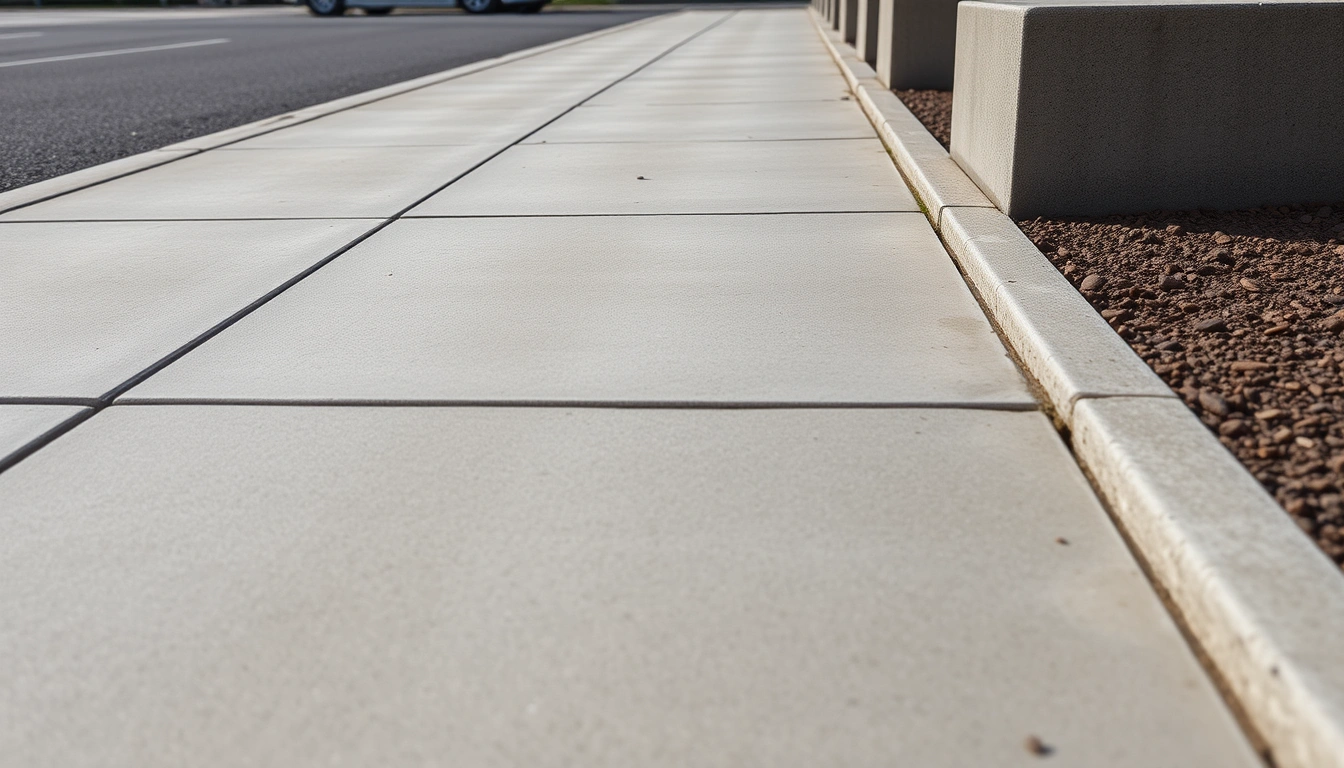
sidewalk liability and responsibility in 2026: who pays and when
⏱️ 15 min read · Last updated: 2026
Sidewalk liability and responsibility in 2026 usually starts with the adjacent property owner, but the answer changes with local ordinances, defect height, and notice deadlines. If you own, manage, or use a property, it helps to understand sidewalk liability and responsibility before a crack turns into a claim. A sidewalk can be public land and still create private maintenance duties, so the first question is not “who owns it?” but “who had the duty, and who got notice?”
- Typical slip-and-fall claim values often settle between $15,000 and $50,000.
- Michigan uses a 2-inch sidewalk defect threshold in many municipal liability cases.
- Sidewalk shift-of-liability ordinance states count is 7.
- Municipal tort claim notice deadlines are often 30 to 180 days.
- In 2019, 118,520 injurious pedestrian falls on streets and sidewalks required EMS response, compared with 33,915 pedestrian-motor vehicle collisions.
How sidewalk liability and responsibility actually works
Sidewalk liability and responsibility usually begins with ownership, then moves to maintenance, then ends with notice and proof. The adjacent property owner often handles routine upkeep, while the city or county may still control the public right-of-way and the repair rules. As a result, the same sidewalk can create different duties in different places.
That is why a “public sidewalk” does not always mean a “public problem.” A sidewalk can be public land and still create private maintenance duties through an abutting property owner ordinance or a sidewalk shift-of-liability ordinance. Once you know that, the next step is to check the local rule, not make assumptions.
In 2026, the fastest way to get sidewalk liability and responsibility wrong is to assume “public sidewalk” means “public problem.”
The Federal Highway Administration says most local governments require adjacent owners to handle routine maintenance, and many assign major repairs too. That is why two houses on the same block can face different duties if one city enforces repairs aggressively and another handles them itself. In other words, the code and the complaint history often matter more than the curb line.
What to look for on the ground
Start with the ownership line, not just the crack. Check whether the slab sits directly in front of one parcel, whether roots came from the city strip, and whether the damage affects a curb ramp or driveway apron. Then compare what you see with the local maintenance rule.
- Check whether the defect is in the public walk or inside a private driveway approach.
- Look for a stamped city complaint number, paint mark, or work order nearby.
- Compare the crack to the local sidewalk trip hazard threshold in inches.
- Photograph the whole panel, not just the broken corner.
One practical point: trip fall liability usually depends on three facts, not one: the defect, the duty, and the notice trail.
| Question | What usually matters | Why it matters |
|---|---|---|
| Who owns the land? | Parcel map, right-of-way line | Ownership can differ from maintenance duty |
| Who maintains the walk? | City code, abutting property owner ordinance | This controls who gets notice and repair pressure |
| How high is the defect? | Measured rise or drop in inches | Thresholds affect whether the defect is actionable |

Who pays in a home versus a business case?
After you understand how duty works, the next question is who actually pays. At a home, the abutting owner often gets the first maintenance call and sometimes the first legal letter. At a commercial site, the owner and the tenant can both face exposure if the lease or local code splits responsibility poorly.
That split is where premises liability sidewalk claims get messy. The injured person may sue the city, the abutting property owner, the tenant, the snow contractor, or all four if the facts support it. So, the answer depends on control, notice, and the written record.
California gives a useful example. Government Code Section 835 sets conditions for public-entity liability on dangerous conditions, while Los Angeles Municipal Code Section 56.08 requires adjacent owners to maintain sidewalks in safe, hazard-free condition. In the same city, the practical answer can be “both” depending on who created the condition and who ignored it.
Commercial property adds one more layer: insurance. A general liability insurance policy may defend a sidewalk slip-and-fall claim, but only if the policy, endorsements, and insured location language actually cover the sidewalk area and the alleged negligence. That is why coverage review should happen before a claim, not after one.
Who is usually first in line?
The first in line is often the party who had the easiest chance to fix the problem. That could be the business that sweeps the walk every morning, the landlord that controls exterior maintenance, or the city that received written notice two months ago and did nothing. In practice, control and delay usually matter as much as title.
- Homeowners should check city code, permit rules, and tree responsibility rules.
- Commercial owners should review the lease, certificate of insurance, and exterior maintenance clause.
- Tenants should confirm whether they clear debris, ice, or obstructions.
- Both should keep repair requests in writing.
For repair planning, sidewalk repair is usually cheaper before a claim than after one, because claims add legal fees, photographs, expert opinions, and time. That is why a quick inspection can save money later.
A sidewalk injury claim is rarely about one broken slab; it is usually about whether the owner saw the defect, had a chance to fix it, and left proof behind.
What is the sidewalk trip hazard threshold?
The sidewalk trip hazard threshold is the measurement that can turn a harmless-looking crack into a liability case. In many jurisdictions, the difference is not “it looks bad” but “it rises or drops enough inches to count.” That is why a simple measurement often matters more than a general opinion.
Michigan is the clearest example worth remembering in 2026. Section 691.1402 sets municipal liability around a sidewalk discontinuity greater than two inches, and that standard was clarified by the Michigan Supreme Court in Robinson v. City of Lansing and later codified through HB 4589.
That does not mean two inches is a universal rule. It is not. But it is a useful benchmark because many owners still measure defects by eyeballing them, and that is how they underestimate exposure. A small-looking rise can still be a real trip hazard.
How to measure it correctly
The correct method is simple enough to do with a ruler, straightedge, and phone photo. The wrong method is to stand over the crack and guess. A careful measurement gives you a better record and a clearer next step.
- Place a straightedge across the higher and lower slab edges.
- Measure the vertical gap at the widest point.
- Repeat the measurement from both walking directions.
- Check nearby panels for matching uplift or sinking.
- Record the date, time, weather, and lighting.
- Compare the result to your city’s code threshold or enforcement guide.
- Save the original photo files with location notes.
What you are looking for is the edge profile. A clean 1-inch offset usually photographs differently from a jagged 1.9-inch lip, and that visual difference can affect whether a claim gets evaluated seriously. It also helps explain why the hazard matters to someone walking toward it.
For leveling work, concrete sidewalk leveling often makes sense when the slab is sound but uneven. Once the concrete is shattered or crumbling, lifting is the wrong fix. In that case, replacement is usually the safer option.
| Defect size | Typical concern level | Practical response |
|---|---|---|
| Under 1/2 inch | Often low, but not zero | Monitor, photograph, mark for follow-up |
| 1/2 to 2 inches | Moderate to serious | Measure, repair, document notice |
| Over 2 inches | High concern in many cities | Escalate immediately and restrict access if needed |
Why notice rules beat arguments about fault
Notice rules often decide the case before fault does. If a city requires a municipal tort claim notice within 30, 60, 90, or 180 days and the injured person misses that deadline, the claim may fail even if the sidewalk was dangerous. That is why timing can matter more than a later argument about who caused the defect.
The same logic applies to owners. Once someone sends written notice about a defect, the countdown starts for repair, inspection, or at least a defensible response. Written notice also creates a cleaner record for both sides.
This is where sidewalk liability and responsibility becomes practical instead of theoretical. A city with a shift-of-liability ordinance may push maintenance down to the adjacent owner, but a late notice can still wipe out an injured person’s municipal claim. So the best practice is to document early and often.
What a solid notice file looks like
A good notice file is boring in the best way. It includes date-stamped photos, a clear location, a short description, and proof that the right party received the complaint. That simple file can prevent a lot of confusion later.
- Write the exact address and nearest cross street.
- Measure the defect in inches and note the direction of travel.
- Attach two photos with a ruler or coin for scale.
- Send the complaint to the city and the adjacent owner if both may be involved.
- Keep screenshots, certified mail receipts, or portal confirmation numbers.
- Follow up in writing if no response arrives within 7 to 14 days.
- Recheck the site after weather changes or temporary patching.
New York City is a cautionary example. The city recorded 2,134 sidewalk personal injury claims costing $61.7 million in a single annual report, which means the paperwork around sidewalk complaints is not a side issue; it is the case. With that in mind, a clear notice trail can be just as important as the repair itself.
The correct way to reduce liability now
The correct way to reduce sidewalk liability and responsibility is to inspect, measure, document, and fix in that order. Owners who skip the measurement step usually overspend on the wrong repair or under-react to a serious hazard. A simple routine is often enough to stay ahead of trouble.
The cleanest workflow is simple: identify the defect, assign the party, set the deadline, and keep the record. That routine saves more money than any legal argument later. It also makes it easier to show that the problem was handled promptly.
For visible cracks and uplift, the fastest wins come from trimming trip edges, grinding minor lips, or lifting settle-down panels before they fail. For panels that are broken through, you usually need replacement, not a cosmetic patch. The right fix depends on the damage, not just the appearance.
Use this 6-step owner workflow
- Walk the full frontage after daylight or with a flashlight at an angle.
- Measure every rise, drop, and broken joint in inches.
- Compare the defect to the city’s threshold and maintenance code.
- Decide whether the issue is repairable, temporary, or needs closure.
- Notify the city, tenant, contractor, or insurer with the photos attached.
- Schedule repair and keep the before-and-after record.
If the slab is still structurally sound, trip hazard removal can often solve the immediate problem without full replacement. If the slab has multiple offsets, vertical cracking, or drainage damage, replacement may be the safer call. That decision is easier when the measurements are already on file.
trip and fall liability sidewalk questions also tend to turn on maintenance cadence. A property inspected monthly looks very different in court from one inspected only after a complaint. Regular checks help show care and reduce surprise risks.
Most sidewalk claims are not won on the size of the crack alone; they are won or lost on inspection timing, notice, and whether the owner can show a reasonable maintenance routine.
| Action | Best timing | Goal |
|---|---|---|
| Inspect frontage | Monthly for commercial, quarterly for low-risk homes | Catch cracks before complaints |
| Measure defect | Same day the issue is found | Create usable evidence |
| Send notice | Within 24 hours | Start the response clock |
| Repair or close off | As soon as practical | Reduce injury exposure |
Before vs. after: what good sidewalk liability and responsibility actually looks like
Good sidewalk liability and responsibility looks boring, measured, and documented. Bad sidewalk liability and responsibility looks reactive, verbal, and impossible to prove. The difference is often obvious once you compare the records.
Before the fix, the file should show the defect, the measurement, the ownership question, and the notice date. After the fix, the file should show the repair method, the completion date, and a clean photo of the walking surface. That before-and-after trail is what makes the outcome easy to review.
The difference is visible on the ground too. Before, a raised slab catches the toe of a shoe and throws a shadow line across the joint. After, the transition is flush enough that the edge is hard to see even from a low angle. When the change is clear, the risk usually drops too.
What “good” looks like in practice
Good means the property owner can answer four questions quickly: how tall was the hazard, who was told, when were they told, and what got done. If a manager cannot answer those without hunting through texts, the system is weak. Simple records usually work best.
In 2026, that weakness is expensive. Los Angeles settled $12 million in sidewalk injury claims in 2021, while dealing with a repair backlog, which shows how delayed maintenance compounds public cost and private risk. Prompt repair is cheaper than a long dispute.
| Before | After | What changed |
|---|---|---|
| No measurements | Measured in inches | Evidence can be evaluated |
| Verbal complaint only | Written notice with date stamp | Proof of notice exists |
| Patch and hope | Repair matched to defect type | Less repeat hazard |
concrete sidewalk leveling is the right “after” photo only when the slab stays intact and the lifted edge can be finished smoothly. If the concrete is spalled, broken, or separated at multiple joints, leveling can create a false sense of safety.
The detail everyone gets wrong
The detail everyone gets wrong is assuming insurance solves the liability question. Insurance may pay defense costs or settlements, but it does not decide who was responsible, who got notice, or whether a municipal deadline was missed. Liability still depends on the facts.
A second mistake is treating a small defect as harmless because nobody has fallen yet. Many sidewalk injuries happen on ordinary routes that people use every day, which is why the absence of prior incidents does not erase exposure. A short, simple inspection can catch the problem earlier.
The biggest lesson comes from reviewing a property that had a tidy-looking patch over a hidden edge drop. The patch looked better in photos than on foot, and that mismatch is exactly what causes problems after a rainstorm or after dark. Good records help reveal that gap before someone gets hurt.
What to stop doing today
- Stop guessing at defect height.
- Stop relying on memory instead of photos.
- Stop treating oral complaints as if they were documented notice.
- Stop assuming the city, not the owner, always pays.
- Stop using cosmetic patches on unstable concrete.
- Stop waiting for the first injury before taking the sidewalk seriously.
For business owners, the question “Can I be sued if a person falls on the sidewalk next to my commercial property?” has a plain answer: yes, if the facts show control, notice, or a local ordinance that assigns maintenance or repair duties to the business side. A general liability insurance policy may help, but only after the legal exposure exists.
A lawsuit often starts long before the fall, at the moment a defect is seen and no written record is created.
Common Questions About sidewalk liability and responsibility
Who is legally responsible if someone trips on the sidewalk in front of my house?
Usually the adjacent property owner handles maintenance, but legal responsibility depends on local code, ownership, and notice. In some cities, the municipality keeps repair duty; in others, an abutting property owner ordinance pushes repairs to the homeowner. Measure the defect and check the city rule first.
Can I be sued if a person falls on the sidewalk next to my commercial property?
Yes. A business can face a premises liability sidewalk claim if it controls the area, knew about the defect, or had maintenance duties under a lease or local ordinance. The case often turns on inspection records, written complaints, and the exact location of the hazard.
What is the sidewalk trip hazard threshold in inches?
There is no universal national threshold. Michigan uses a 2-inch discontinuity standard for many municipal liability cases, while other cities use different measurements or hazard definitions. Always measure the vertical offset in inches and compare it to the local code, not a general internet rule.
How fast do I need to file a municipal tort claim notice?
Deadlines often run from 30 to 180 days, depending on the city or state. Missing the deadline can block the claim even when the sidewalk defect was real. Send notice immediately after you document the defect, and keep proof of delivery.
Does a general liability insurance policy cover sidewalk claims?
Sometimes. A general liability insurance policy may cover a slip-and-fall claim if the sidewalk area falls within the insured location or the policy language covers the alleged negligence. Coverage depends on endorsements, exclusions, maintenance duties, and whether the claim names the right insured party.
What should I do the same day I find a dangerous sidewalk crack?
Measure the defect, take wide and close photos, notify the city or owner in writing, and decide whether the area needs cones, tape, or a temporary closure. If the rise looks close to 2 inches or higher, move fast and document every step.
- Sidewalk liability and responsibility usually starts with the adjacent owner, but local ordinances can shift repair duty back to the city.
- A measured defect matters more than a guessed one; in Michigan, 2 inches is the key municipal threshold.
- Written notice beats verbal complaints because municipal tort claim notice deadlines can run as short as 30 days.
- Insurance may help, but a general liability insurance policy does not replace documentation, inspections, or code review.
The bottom line
Sidewalk liability and responsibility is not a single rule; it is a system of ownership, maintenance duty, defect size, and notice. The safest move is to stop arguing about who should own the problem and start documenting who controls the hazard today.
Check the local ordinance, measure the defect in inches, and send written notice before anything else changes. That simple sequence can reduce risk and improve your position if a claim follows.
Pick one thing from this article and try it this week: inspect your frontage, measure one defect, or build a written notice log.
Sources and references
The injury and settlement figures cited above are supported by reporting and public data from the National Library of Medicine review, LegalClarity, Weitz & Luxenberg, and Setareh Law.
See also: trip and fall liability sidewalk
See also: sidewalk repair
See also: concrete sidewalk leveling
Related: who is liable for sidewalk trip and fall on commercial prope
Related: sidewalk liability waiver enforceability
Related: should i fix sidewalk before selling house
See also: who is liable for sidewalk trip and fall on commer
See also: trip and fall liability sidewalk
See also: sidewalk repair